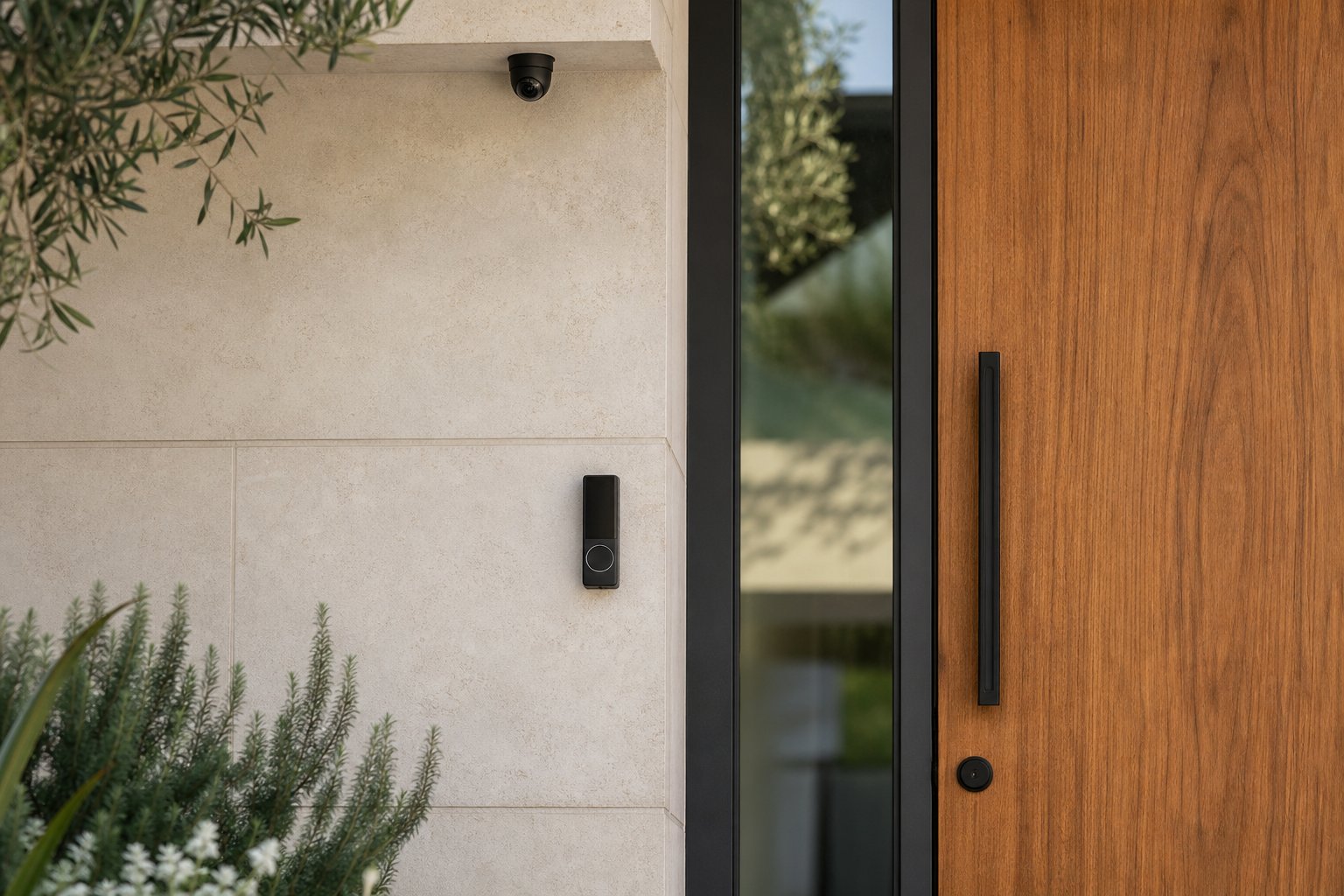
Safety and smart-home features work best when they feel like a natural part of the home. Rather than adding technology for its own sake, begin with the moments you want to support: arriving after dark, checking an entry, hearing a clear alarm or knowing that everyone understands what to do in an emergency.
A thoughtful plan brings these features together without making the house feel complicated. The result should be reassuring, intuitive and suited to the people who live there.
Think in layers, not gadgets
Good home security starts with the property itself. Entries, lighting, sightlines, locks and landscaping all influence how safe and welcoming a home feels. Smart devices can complement those foundations, but they should not replace them.
Walk around your home at different times and notice where visibility drops, where access feels unclear and where a visitor might hesitate. Simple improvements to lighting and approach can make later technology choices more effective.
Keep the welcome in view: security should support a sense of ease, not turn your entrance into a barrier. Discreet placement, warm lighting and clear access can make protection feel integrated rather than intrusive.
Make fire safety part of the plan
Fire safety belongs in renovation conversations early, especially when layouts, kitchens, electrical systems or heating features are changing. Detection, alarms, extinguishers and escape routes should be considered together with the design.
Qualified professionals can advise on suitable equipment, placement and local requirements. Once installed, everyone in the household should know how alarms sound, where exits lead and how to respond without hesitation.
- Keep detection and alarm equipment accessible for required testing and maintenance.
- Avoid blocking escape routes with furniture, storage or locked barriers.
- Choose fire-safety equipment appropriate to the area and its likely risks.
- Include safety checks in your regular home-care routine.
Keep technology welcoming
A smart feature is only useful when the people at home feel comfortable using it. Choose clear controls, straightforward alerts and systems that can still perform their essential function if an app is unavailable.
Think about guests, family members and anyone who may prefer a physical switch or key. Providing an intuitive alternative can make the whole setup more resilient and less frustrating.
Protect privacy alongside the property
Connected cameras, doorbells and sensors may collect information about your household and visitors. Review privacy settings, choose strong account protection and be deliberate about where devices are placed.
Interior devices deserve particular care. Aim to monitor entries and shared areas only where appropriate, and make sure household members understand what is being recorded and why.
Prepare for the unexpected
Confidence comes from knowing what happens when normal routines are interrupted. Consider how you would access the home during a connectivity issue, how alerts reach the right person and where essential emergency information is kept.
A simple household conversation can be as valuable as a new device. Agree on meeting places, emergency contacts and basic responses, then revisit the plan whenever your home or household changes.
Let your setup evolve
Safety is not a finish you apply once and forget. Renovations, new routines and changing technology can all affect what your home needs. Periodic reviews help you remove what no longer serves you and strengthen the layers that do.
The smartest result is often the calmest: a home where essential features work quietly in the background, everyone understands the basics and good design still takes centre stage.
Have a project in mind? We can help you shape your ideas into a thoughtful plan for your home.
Start a conversation